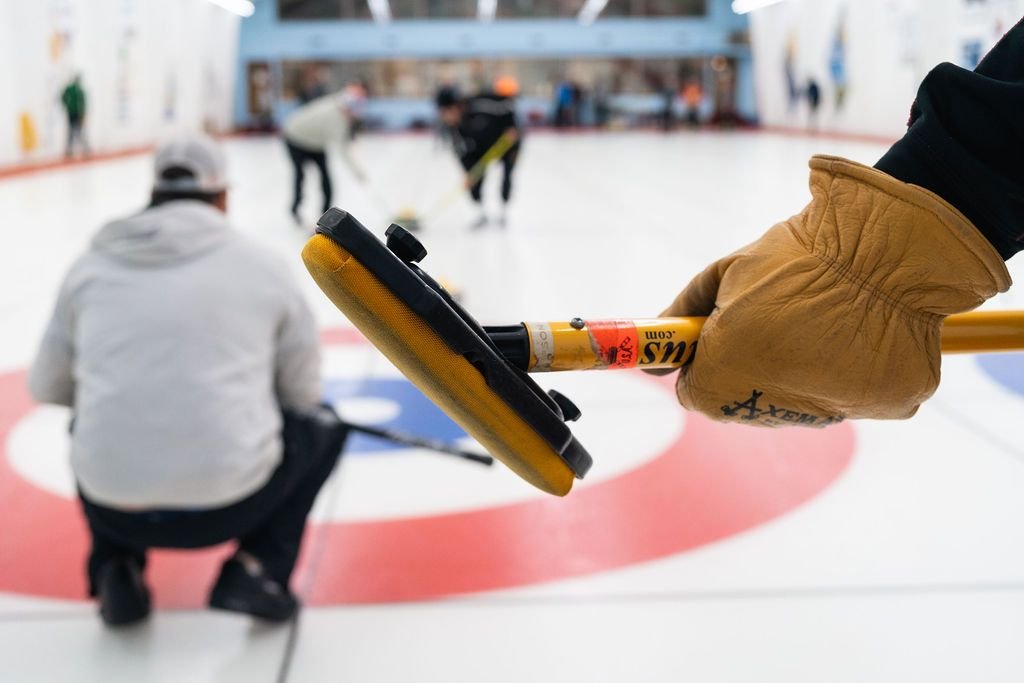
If you’re new to curling, you may have heard of a bonspiel—a curling tournament that brings teams together for friendly but competitive games. Whether you’re gearing up for your first bonspiel or just curious, here’s a quick guide to help you get started.
What Is a Bonspiel?
A bonspiel is a curling tournament, where teams from different clubs compete in a series of games. The term comes from the Scottish Gaelic word “bonn spèil,” meaning “game of stones.” It’s an opportunity for curlers of all skill levels to compete, learn, and enjoy the social aspects of the sport.
What You Need to Play
Team: A curling team consists of four players: lead, second, vice-skip, and skip. Each player has a specific role during the game.
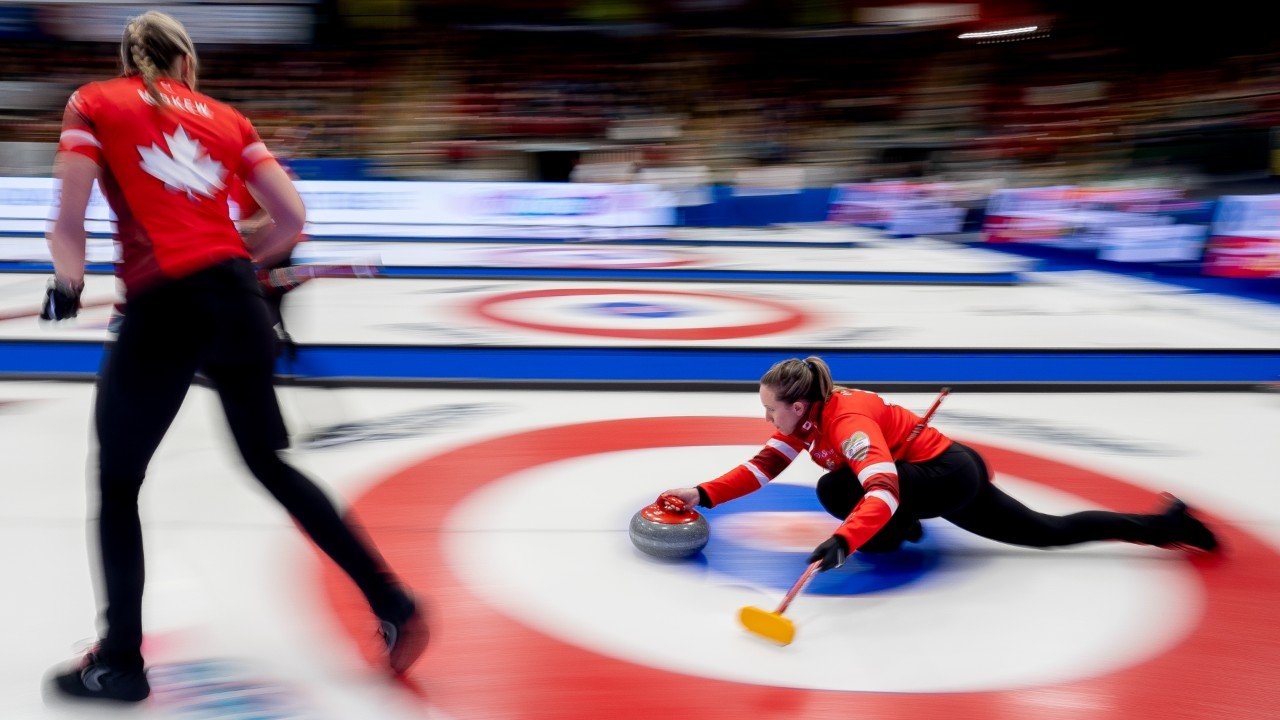
Gear: You’ll need curling shoes, which have a sliding and gripper sole, and a broom for sweeping. Rinks usually provide the curling stones.
Understanding the Basics: In a bonspiel, each game is played over 8-10 ends, with teams taking turns delivering stones. The team with the most stones closest to the center of the target (the “house”) scores points in each end.
How the Bonspiel Works
Bonspiels usually follow a round-robin or elimination format. In a round-robin, each team plays against every other team in their group. The top teams advance to playoffs. Games can vary in length, but most are fast-paced and exciting.
Tips for New Players
Practice: Spend time familiarizing yourself with the basic skills—delivering the stone, sweeping, and team communication.
Teamwork: Curling is all about working together. Listen to your teammates and stay positive.
Enjoy the Social Side: Bonspiels often include social gatherings after the games. It’s a great way to meet new people and relax after a day on the ice.
Conclusion
A bonspiel is a fun, challenging way to improve your curling skills and connect with others. Whether you’re playing for the win or just for the fun of it, bonspiels are a fantastic way to immerse yourself in the sport. Enjoy the experience, and may your stones always find the house!
Don’t Miss a Shot!
Get the latest on new designs, promotions, and curling-related content—delivered straight to your inbox.